An official website of the United States government
Here's how you know
Official websites use .gov
A .gov website belongs to an official government organization in the United States.
Secure .gov websites use HTTPS
A lock (
) or https:// means you’ve safely connected to the .gov website. Share sensitive information only on official, secure websites.
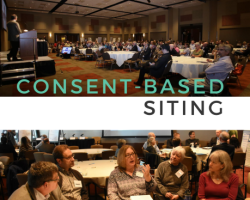
The successful siting of nuclear waste management facilities, through a consent-based process, is predicated on a robust and transparent dialogue between the Department and its stakeholders. From December 23, 2015 through July 31, 2016, DOE solicited and received public comments and heard input from a wide range of individuals, communities, states, Tribes, and stakeholders through the multiple avenues described above.
Summarize alternatives for moving SONGS SNF offsite to an interim storage facility or repository. Describe the process for preparing for transporting canisters offsite. Summariz the SCE Action plan for making progress to move SNF offsite.
The Strategy for the Management and Disposal of Used Nuclear Fuel and High-Level Radioactive Waste is a framework for moving toward a sustainable program to deploy an integrated system capable of transporting, storing, and disposing of used nuclear fuel1 and high-level radioactive waste from civilian nuclear power generation, defense, national security and other activities. The Strategy addresses several important needs.
The report, Commercial Spent Nuclear Fuel and High-Level Radioactive Waste Inventory Report(FCRDNFST- 2013-000263, Rev.4), provides information on the inventory of commercial spent fuel, referred to in this report as used nuclear fuel (UNF), as well as Government-owned UNF and High Level Waste (HLW) in the U.S. Department of Energy (DOE) complex. Inventory forecasts for commercial UNF were made for a few selected scenarios of future commercial nuclear power generation involving the existing reactor fleet including one scenario involving reactors under construction.
This report provides an evaluation of the cost implications of incorporating a consolidated interim storage facility (ISF) into the waste management system (WMS). Specifically, the impacts of the timing of opening an ISF relative to opening a repository were analyzed to understand the potential effects on total system costs.
This 10th anniversary update to the original archive adds several sections that cover relevant topics since 2010. Some of the new topics include the Blue Ribbon Commission on America's Nuclear Future, consent-based siting, tribal engagement, shutdown site visits, and industry interests. Much like the first publication, the purpose of this update is to make it easier for new personnel to learn about what came before them in the hope that this knowledge gives them a greater chance of success.
This is a copy of the non-proprietary version of Revision 15 of the HI-STAR 100 safety analysis report (SAR). This version of the SAR contains information pertinent to the Humboldt Bay specific MPC-HB canister and the HI-STAR 100 HB transportation cask.
The Fukushima nuclear event of March 2011 dramatically revealed the potential risks of holding significant spent nuclear fuel at wet pools requiring continuous water circulation to maintain safe cooling. The housings for four spent fuel pools were badly damaged, and all pools lost cooling and nearly suffered fuel exposure. These conditions had the potential to result in catastrophic radiation release, rivaling or exceeding safety concerns over the nuclear reactors themselves.
This is the final report for the Argonne National Laboratory-East (ANL-E) Building 200
M-Wing Hot Cells Decontamination Project. The purpose of the project was to practically eliminate
the radioactive emissions of Rn-220 to the environment and to restore the hot cells to an empty
restricted use-condition. About 96.2 TBq (2,600 curies) per year of Rn-220 was being emitted at the
start of the project from the radioactive contaminants left in the hot cells at the end of the ANL-E
Proof-of-Breeding program work in 1985.
This is the final report for the Argonne National Laboratory-East (ANL-E) Building 200
M-Wing Hot Cells Decontamination Project. The purpose of the project was to practically eliminate
the radioactive emissions of Rn-220 to the environment and to restore the hot cells to an empty
restricted use-condition. About 96.2 TBq (2,600 curies) per year of Rn-220 was being emitted at the
start of the project from the radioactive contaminants left in the hot cells at the end of the ANL-E
Proof-of-Breeding program work in 1985.
The Cyclic Integrated Reversible-Bending Fatigue Tester (CIRFT) can be used for
investigating the vibration integrity of spent nuclear fuel during transportation.This report is the R&D 100 submission related to the CIRFT.
This three-volume report serves several purposes. The first volume provides an introduction to the engineered materials effort for the Yucca Mountain Site Characterization Project. It defines terms and outlines the history of selection and
characterization of these materials. A summary of the recent engineered barrier system materials characterization workshop is presented, and the current candidate materials are listed. The second volume tabulates design data for engineered
<p>A report from the US&nbsp; Deparement of Energy&#39;s Office of Civilian Radioactive Waste Management</p>
<p>Regulatory Drop Tests Planned for a Model Transportation Cask</p>
<p>Implementation Plan for the environmental Impact Statement for a Multi-Purpose Canister System for Management of Civilian and Naval Spent Nuclear Fuel Issued</p>
<p>Nuclear Waste Technical Review Board (NWTRB) Update</p>
<p>The NWTRB</p>
<p>Dry Transfer System Design Under Way</p>
This report was prepared for the Secretary of Energy by a team of federal and contractor
personnel led by the Department’s Office of Nuclear Energy. The report assesses the technical
options for the permanent disposal of high-level radioactive waste (HLW) and spent nuclear fuel
(SNF) managed by the Department of Energy. Specifically, it considers whether DOE-managed HLW and
SNF should be disposed of with commercial SNF and HLW in one geologic repository or whether there
This three-volume report serves several purposes. The first volume provides an
introduction to the engineered materials effort for the Yucca Mountain Site
Characterization Project. It defines terms and outlines the history of selection and
characterization of these materials. A summary of the recent engineered barrier
system materials characterization workshop is presented, and the current candidate
materials are listed.
This report describes a task performed in the Energy Material Transport,
Now Through 2000, System Characteristics and Potential Problems (Transportation
Problems) Project. This project was sponsored by the Department of Energy,
Environmental Control Technology Division. The DOE Project Monitor was
R. F. Garrison; Project Manager at PNL was J. G. DeSteese. A continuation of
the cask turnaround study is currently supported by the Transportation Technology
Center at Sandia National Laboratories, the DOE1s lead laboratory for Transportation
A Program Research and Development Announcement (PRDA) was
initiated by DOE to solicit from industry new and novel ideas for
improvements in the nuclear waste management system. GA Technologies
Inc. was contracted to study a system utilizing a universal canister
which could be loaded at the reactor and used throughout the waste
management system.
<p>A newsletter from the Office of Civilian Radioactive Waste Management</p>
<p>Highlights Include....</p>
<p>OCRWM FY 1996 Budget Presented to Congress</p>
<p>Public Responds to Waste Acceptance Issues</p>
<p>Transportation External Coordination Working Group Convenes in North Carolina</p>
<p>OCRWM Completes Draft Public Participation Plan</p>
<p>International Program Update</p>
Disclaimer: Note that this page contains links to external sites. When
leaving the CURIE site, please note that the U.S. Department of Energy and Pacific Northwest National Laboratory
do not control or endorse the content or ads on these sites.